
Electromyokinesiography for temporomandibular joint dysfunction
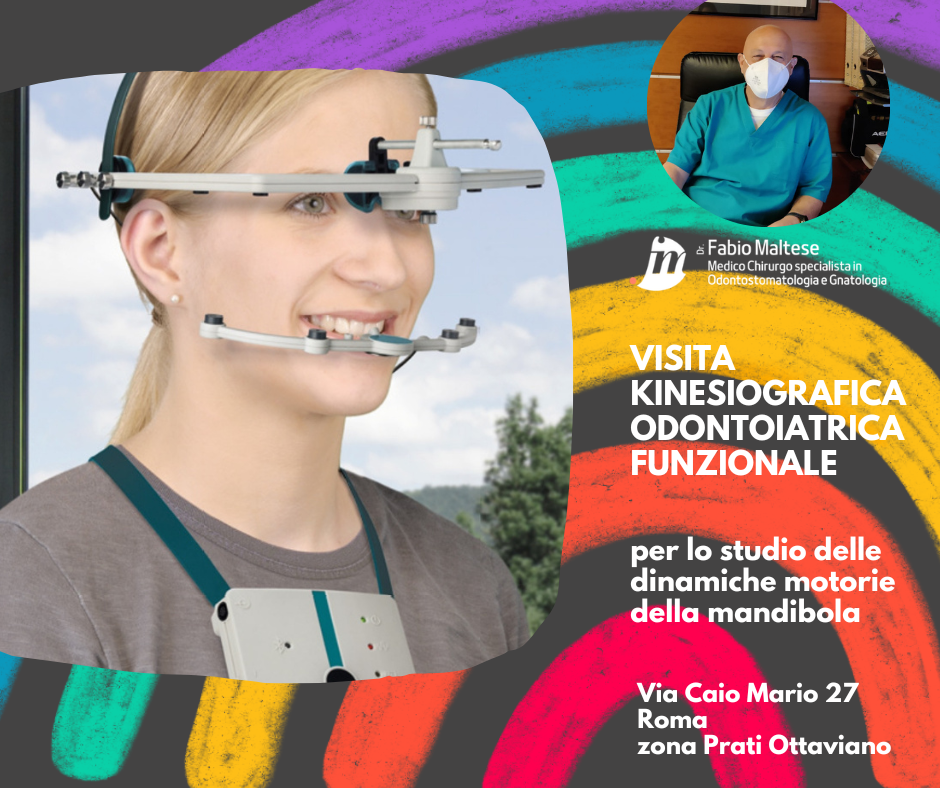
The kinesiographic technique consists of an investigation of mandibular kinematics using electronic equipment. This technique is based on the theory of neuromuscular occlusion, which involves finding a relationship between the dental arches such that the muscles do not have to make adaptive efforts to achieve it. This avoids muscle tension, which can be the cause of a series of different temporomandibular joint disorders.
The kinesiographic analysis is performed first in a habitual position of hypothetical muscle contracture. Then, thanks to the use of TENS, we are able to relax all the muscles innervated by the trigeminal and facial muscles. Relaxation reduces or eliminates the tension generated by the forced functional adaptation to the existing occlusion. This allows us to always operate with full respect for the patient's physiology, rehabilitating them in the new occlusal position in which the muscles are in balance with each other.