
Microsurgery
Surgical techniques are continually evolving, leading to the development of protocols, instruments, and materials that enable minimally invasive oral surgery in all its forms.
Microsurgery in dentistry uses instruments such as the piezoelectric scalpel, invented by an Italian oral surgeon, also used in neurosurgery, spinal surgery, and otosurgery. Bone surgery procedures on the mandible and maxilla are much more conservative, less traumatic for the patient, and have fewer after-effects than traditional surgery performed with drills or bone saws. This method allows surgery to be performed in areas where traditional techniques would be high-risk due to their proximity to structures such as nerve fibers or arteries, structures that should not be violated, such as the maxillary sinus. Traditional systems such as burs or saws, if they come into contact with nerve fibers, can cause permanent damage, while piezoelectric systems do not cause damage in the event of occasional or involuntary contact with nerve fibers. It can be used in extractions, in the treatment of periodontal disease, in implantology , and in bone harvesting performed in reconstructive and regenerative surgery. This greatly benefits the patient, as the reduction in post-surgical sequelae is clearly evident, with less swelling, bruising, and pain.
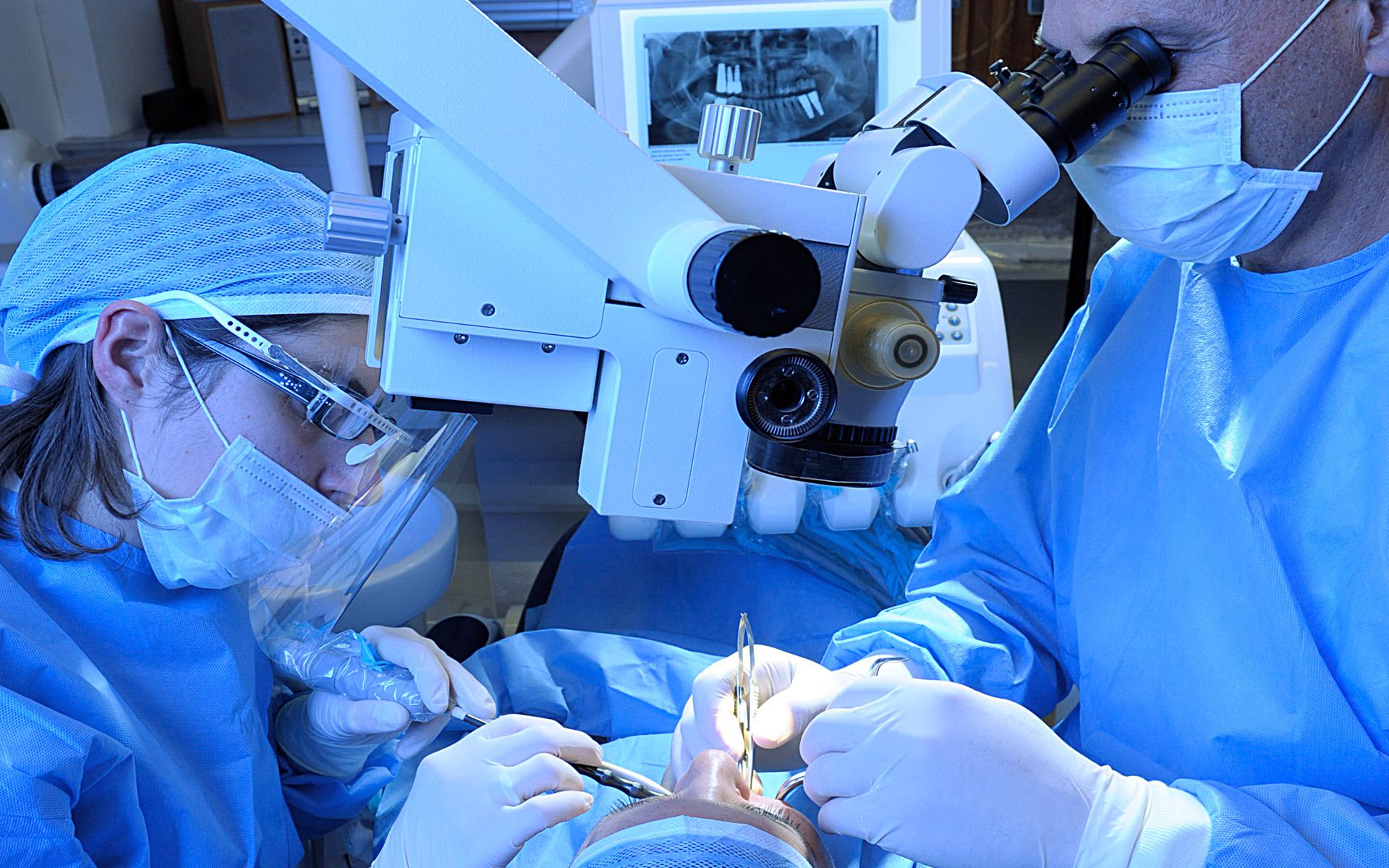
We cannot fail to mention the application of the Operating Microscope in microsurgery, which, in addition to its classic applications in endodontics, conservative dentistry, and prosthetics, is used with great benefit in more delicate surgeries. For example, the use of optical magnification combined with piezoelectric surgery allows for the performance of major maxillary sinus lift with great safety, or even in mucogingival surgery where micro scalpels and micro sutures are used. These very small instruments are thus used under high magnification, and since the operating field is very narrow, the procedure is performed in a much more atraumatic and minimally invasive manner.
The evolution of surgical dental techniques is continuous, and research is being conducted to ensure they are increasingly less invasive for the patient. Flapless techniques, that is, without the use of scalpels and sutures, are the least invasive in implantology. Mini maxillary sinus lift techniques, piezoelectric bone harvesting techniques, tunnel techniques for mucogingival surgery, the use of the patient's own bone substitutes, and finally, biotechnologies come to the aid of the patient, who is increasingly central to the surgeon's objective.